

Toy Rotation for Babies and Toddlers: A Simple Montessori Setup (Australia)

If your living room looks like a toy shop has exploded, you are not alone. Toys multiply, especially around birthdays and Christmas, and a lot of them end up on the floor, untouched. Toy rotation is a simple fix. You keep a small selection out, store the rest, and swap them every week or two. This guide explains how to do it in a calm, Montessori-inspired way, for babies and toddlers, in a real Australian home.
What is toy rotation?
Keeping most toys in storage and offering a small selection at a time, then swapping them every week or two.
How many toys out at once?
Many families find six to ten works well for a baby or toddler. Start with fewer.
How often do I rotate?
Weekly or fortnightly is common. Better still, watch your child and swap what they have stopped using.
Is it Montessori?
It is a Montessori-inspired practice: a small, tidy selection of simple, open-ended toys on a low shelf.
What toys work best?
Open-ended toys, such as a stacker, a knitted toy and simple sensory items.
What do I do with gifts?
Add them to the rotation. See handling gifts.
What Is Toy Rotation?
Toy rotation is a simple idea. Instead of leaving every toy out, you keep a small number available and store the rest. At regular intervals, you swap some of the toys for others from storage. To your child, the toys that return feel new, and the ones that are out get more attention.
The idea fits neatly with Montessori-inspired play, which favours a calm, uncluttered space with a small selection of simple, open-ended materials that a child can reach and choose for themselves. If you are new to the approach, our beginner's guide to Montessori for babies explains the thinking, and our post on Montessori toy trends covers why it is so popular.
You do not need to follow Montessori to use rotation. It works just as well in a family that has never heard of it. All you need is somewhere to store the toys that are not out, and the willingness to put a few away.
Why Toy Rotation Works
There is no magic here, and no need for big claims. The reasons it helps are simple and practical.
- It reduces clutter. Fewer toys out means a tidier space, and a tidier space is easier to keep that way.
- It makes toys feel fresh. A toy that has been away for a fortnight is interesting again.
- It helps focus. With fewer things to choose from, many children play for longer with each one.
- It makes tidy-up easier. A small selection means a short job, and an older toddler can help.
- It saves money. You make better use of what you already have, so you buy less.
- It lets you watch. With fewer toys, you notice what your child is drawn to, and you can choose what to bring out next.
Raising Children Network describes simple, open-ended play as valuable for young children, and it is the kind of play that rotation encourages. If you want to read more about how children play, it is a good place to start.
How Many Toys Should Be Out?
There is no perfect number, and anyone who gives you a precise one is guessing. Many families find that somewhere between six and ten toys works for a baby or toddler, set out on a low shelf or a mat so each one is easy to see. A young baby may need just three or four items on a play mat.
A helpful rule is to start with fewer than you think you need. You can always add more. If your child seems bored or keeps asking for something, bring something out. If the toys are being tipped out and ignored, take some away.
It is also worth thinking in categories rather than numbers. A balanced selection often includes something for each of these:
- Something to stack or sort, like a silicone rainbow stacker.
- Something soft to cuddle, like a knitted toy.
- Something to explore with the mouth and hands, like a teething wheel, for babies who are teething.
- Something to move, like a ball or a push toy.
- A book or two, within easy reach.
- Something for pretend play, for older toddlers.
How to Set Up Toy Rotation in Five Steps
Step 1: Gather everything
Collect every toy in the house, and put them in one place. It can be surprising how many there are. This is also a good moment to remove broken toys, toys that are too old for your child and anything that is not safe. Product Safety Australia has guidance on toy safety.
Step 2: Sort into groups
Group toys by type: stacking, soft, musical, books, pretend, outdoors. Seeing them together helps you choose a balanced selection.
Step 3: Choose your first set
Pick six to ten toys for the first set. Choose a mix that suits your child's current stage and interests. Put the rest out of sight, in a cupboard, a box or a high shelf.
Step 4: Set them out so your child can choose
Place the toys on a low shelf or in a tray, where your child can see and reach each one. Spread them out so each toy has its own space, rather than piling them into a basket. A tidy display invites a child to choose, and it makes it easier for them to put things back.
Step 5: Observe, then swap
After a week or two, look at what has been played with. Swap out what has been ignored, and keep what is being used. Bring in toys from storage that suit what your child seems to be exploring. Over time, you will get a feel for what works, and the whole thing will take about five minutes.
Toy Rotation by Age
Newborn to three months
Very young babies do not need many toys. A high-contrast card, a soft toy to look at and a rattle are enough, and most of the time they are happy with your face and voice. If you want to offer a little more, our Playground Box 1: Hello World is designed for newborns to 3 months. Tummy time is a good moment to offer one or two simple items.
Four to six months
Babies are reaching, batting and grabbing. Offer three or four items on a mat, and change one or two every few days. The Playground Box 2: Learn and Explore is made for this stage.
Seven to nine months
Sitting, crawling and exploring begin. Offer a few more items, with a mix of textures. The Playground Box 3: Nurturing Thoughtful Play suits 7 to 9 months. A knitted toy is a favourite at this stage, for cuddles and for carrying.
Ten to twelve months
Pulling up, cruising and a lot of putting in and taking out. A stacker, a basket of simple items and a few board books are all good. Keep the selection small and the shelf low.
One to three years
Toddlers want to do things themselves. A low shelf lets them choose. Keep six to ten toys out, with a mix of stacking, pretend play, books and something to move. Rotate every one to two weeks, or when interest drops. At this age, children can also help put toys away, which is a lovely Montessori habit to build.
Three Sample Rotations
To make it concrete, here are three simple sets that show how rotation might look with toys from our range. They are examples, not rules.
Set A: soft and sensory
- Keith the Koala, a knitted toy with a gentle rattle
- Multi-Surface Teething Wheel, for babies who are teething
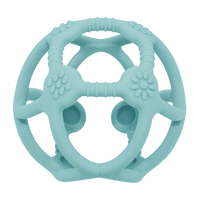
- Silicone Teething Ball
- A soft muslin to touch and explore
- A board book with bold images
Set B: stack and build
- Silicone Rainbow Stacker
- A set of wooden blocks or cups
- A basket with a few safe household items to sort
- Penny the Platypus as a cuddle break
- A board book
Set C: outings and water
- Silicone Beach Toy Set, for sand, water and the bath
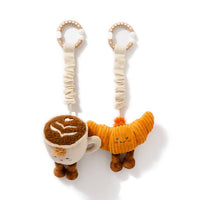
- Stroller toys, for the pram and car seat
- Amelia the Bunny, a soft knitted toy with a gentle rattle
- A small ball
After a fortnight, you might swap Set A for Set B, and bring back Set C for a summer weekend. Because each set is simple, the swap takes only a few minutes.
How to Know When It Is Time to Swap
A calendar is a handy starting point, but your child is the best guide. Watch for these signs that a set has run its course.
- Toys are being ignored, or only tipped out and left.
- Your child keeps going back to the same one or two items, and ignores the rest.
- Play has become a little restless or repetitive.
- Your child has reached a new skill, such as sitting, crawling or pulling up, and the old set no longer suits.
- You have noticed a new interest, such as stacking, putting things in a container or carrying things around.
On the other hand, if your child is deeply absorbed in a toy, leave it out. Rotation is about supporting play, not interrupting it. A favourite can stay on the shelf for weeks, and the rest can come and go around it.
Rotating Toys With Siblings or Mixed Ages
Rotation gets trickier when there is more than one child. A baby and a preschooler have different needs, and small parts that suit an older child may not be safe for the baby. Keep toys with small parts out of the baby's reach, and consider a separate shelf or a high shelf for the older child's items. Kidsafe has advice on keeping babies safe around older siblings' toys.
It also helps to rotate for the whole family. A shared set of open-ended toys, like blocks and a stacker, can be used by both children, and a few special items can be kept for each. Older children can often help choose what comes out, which gives them a sense of ownership and makes tidy-up easier.
Common Toy Rotation Mistakes
- Putting out too many toys. If the floor is covered, take some away.
- Rotating too often. Constant change can be unsettling. Give each set time.
- Never rotating. A shelf that never changes goes stale.
- Hiding favourites. If your child loves something, leave it out.
- Storing toys where they can be seen. A child who spots the storage box will ask for it. Keep it out of sight.
- Over-organising. Rotation should save you time. If it feels like a job, simplify it.
The goal is calm, not perfection. A shelf that is mostly tidy and mostly interesting is a success.
A Weekend Plan to Get Started
If you would like to try rotation, here is a plan that fits into a weekend and does not need any special equipment.
- Saturday morning: gather every toy into one room. Remove anything broken or unsafe.
- Saturday afternoon: sort the toys into groups, and pick your first set of six to ten.
- Saturday evening: box up the rest and store them out of sight.
- Sunday morning: set up the display on a low shelf or a mat.
- Next week: watch what is played with, and note what is ignored.
- In a week or two: swap a few toys, and keep going.
Most families are surprised by how quickly it becomes a habit, and by how much calmer the room feels. If you have read this far, you already know more than enough to begin.
Storage and Display
Rotation only works if the stored toys are out of sight and out of mind, and the displayed toys are easy to reach. Here are some practical tips.
- Use a low, open shelf for the toys that are out. A child can then see and choose.
- Use closed storage for the rest. A cupboard or a few lidded boxes on a high shelf works well. Choose boxes with a safe lid, and avoid heavy toy chests with a lid that can fall. Kidsafe has advice on toy box safety.
- Secure furniture to the wall. Shelves can tip if a child climbs them. Anchor them according to the instructions, and see Kidsafe for guidance.
- Keep a system. A simple label on each storage box, or a note on your phone, helps you remember what is where.
- Use a tray or basket for each toy. It defines the space and makes tidy-up easier.
- Keep the display calm. Neutral colours and a bit of space between toys make the shelf look inviting.
You do not need to buy special furniture. A low bookcase, a bench or even a mat on the floor can work as a play space. The point is a clear, simple space where your child can see what is on offer.
Handling Gifts and Birthday Overload
Gifts are where toy rotation is tested. A birthday or Christmas can add a dozen new toys overnight, and it can feel rude to put them away. A few strategies can help.
- Add new toys to storage first. Bring them out over the following weeks, a few at a time.
- Ask relatives for fewer, better gifts. A single open-ended toy, a book, or an experience lasts longer than a pile.
- Suggest consumables or experiences. A zoo pass, a swimming lesson or art supplies take up no shelf space.
- Share a wish list. A short list guides gift-givers and prevents duplicates.
- Pass on what is outgrown. Donate or swap toys that no longer suit your child.
If you are the gift-giver, you can help. Choose a single, open-ended toy that suits the child's stage, and consider a gift that grows with them. Our first birthday gift ideas and newborn gift ideas can help. A build-your-own bundle is also a good option, because it combines a few items into one thoughtful gift, with 10% off at 3 or more products.
A Note on Safety
Whatever you display, check that it is safe for your child's age. Look for small parts, loose threads, damaged items and anything that has been broken. Product Safety Australia and Kidsafe have guidance on toys and child safety in Australia.
Always supervise play, especially with babies who mouth everything. Teethers, stackers and soft toys all need supervision, and soft toys do not belong in a cot for sleep. For safe sleep advice, see Red Nose Australia.
Building a Rotation on a Budget
The great thing about rotation is that it asks you to buy less. But if you would like to add a few good toys, a few well-chosen items go a long way. Exact prices as at October 2026. Prices may change, so check the product page. Orders over $75 ship free in Australia.
Under $25
- Multi-Surface Teething Wheel – $20.99
- Silicone Teething Ball – $17.99
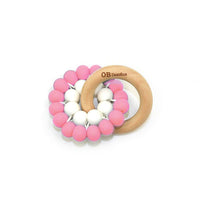
- Wooden Teether – $18.87
$25 to $50
- Silicone Rainbow Stacker – $34.95
- Silicone Beach Toy Set – $34.95
- Stroller Toys 2-pack – $34.99
- Knitted Australian Animal Toys – $38.99
- Amelia the Bunny Knitted Toy – $38.99
$100 and over
- Playground Boxes (0-3, 4-6 and 7-9 months) – $119.99 each
- Build your own bundle – choose 3 or more products and your bundle pricing applies automatically.
Frequently Asked Questions
What is toy rotation?
Toy rotation means keeping most of your child's toys out of sight and offering only a small selection at a time. Every week or two you swap some of them for others from storage. It keeps play fresh, reduces clutter and makes it easier for a child to focus on what is in front of them.
How many toys should be out at once?
There is no fixed number. Many families find that somewhere around six to ten toys works well for a baby or toddler, set out so each is easy to see and reach. Start with fewer and add more only if your child seems to want them.
How often should I rotate toys?
Many families rotate weekly or fortnightly. A better guide is your child: swap items when they have stopped touching them, or when you notice a new interest. There is no rule you have to follow.
Is toy rotation Montessori?
It is a common Montessori-inspired practice. Montessori homes tend to offer a small, tidy selection of simple, open-ended materials on low shelves so the child can choose. Rotation is a way to keep that selection fresh without buying more.
Does toy rotation work for babies?
Yes. For babies, rotation can be as simple as offering three or four items on a mat and swapping them every few days. Choose items that suit your baby's stage, and always supervise.
What do I do with all the toys that are not out?
Store them somewhere out of sight, such as a cupboard or a closed box. Keep storage safe, with no heavy lids and no furniture that could tip. Kidsafe has advice on toy storage and furniture safety.
How do I handle gifts from grandparents and friends?
Put the new toys into the rotation. Many families add them to the storage box and bring them out in turn. You can also ask relatives for fewer, better gifts, or for experiences and consumables instead.
General guidance is based on Raising Children Network, Kidsafe and Product Safety Australia. This post is general information, so always ask your GP or child health nurse about your child's needs. Tiny Moments Co is an Australian-owned small business based in Lennox Head, NSW. Prices and ranges are current as of October 2026 and may change.